Enrolling in this class (Research Studio), I knew I would be required to come up with a project at the end of the semester. I did not beat myself too hard about it because I knew I had time to come up with something. Within a few weeks, we were tasked to start fleshing out ideas for the projects and I began to narrow down my ideas. I knew I wanted to work on a piece that will make use of technology so I figured I will do a piece that requires images being projected on a screen. Then I figured I should delve deeper into storytelling which I touched on in my Choreography workshop class. The question then became, “How do I have a storytelling session fused with projections or with the usage of technology.”
I started reminiscing on my childhood when my brothers will make stencils of characters and move the stenciled characters behind a curtain while they narrated a story. So, we listened to the stories as we watched the shadows of the characters from the front of the curtain. This sparked the idea of storytelling and shadow play as my project for this research studio class. Then I started battling with how I wanted to align both ideas. Do I tell the story while the shadow play happens, like my brothers used to do, or do I tell the entire story and later have the shadow play at the end. I figured since it will be a virtual showing, and I will be the storyteller and dancer, I would have to do them separately. Some ideas about the whatness of the project emerged; create a community where people will be listening to a story while participating by interacting and singing, sharing moral lessons from storytelling, share stories from the Ghanaian culture, tell a story with a visual component, shadow play, and the trickster character. These ideas were solid and engaging and I planned to develop them. Several research questions about this project emerged.
How does a performer embody a story being told?
How can the audience participate in a performance?
What stories are told during storytelling sessions?
What impact do shadows make visually?
With all these sumptuous ideas and questions, I settled on telling the story “Kweku Ananse and the Pot of Wisdom.” Ananse stories are told to people of all ages since people do not outgrow stories and everyone needs to learn as each day goes by. Ananse stories expose people to moral lessons which guide their daily decisions and life choices. This particular story is told to educate people on how important and resourceful every person is, how people should not be underestimated, how knowledge is not found in just one person’s mind, how we can be knowledgeable and intelligent in different ways, how children can be very intelligent among others. There are unending themes and moral lessons that can be deduced from this story. The response from the class after sharing it was amazing. Below are some of the moral lessons that my colleagues deduced from the story.
“makes me think of what I do as a researcher/academic sometimes, but hopefully without the negative connotation or plagiarism.”
“Makes me think of the phrase “knowledge is power.”
“what we are looking for is sometimes right in front of us.”
“What ideas are we protecting/keeping secret that the world needs? The world needs your beautiful work!”
“the wisdom of children.”
“Wisdom and knowledge are always being produced!”
“Sharing wisdom as opposed to taking it.”
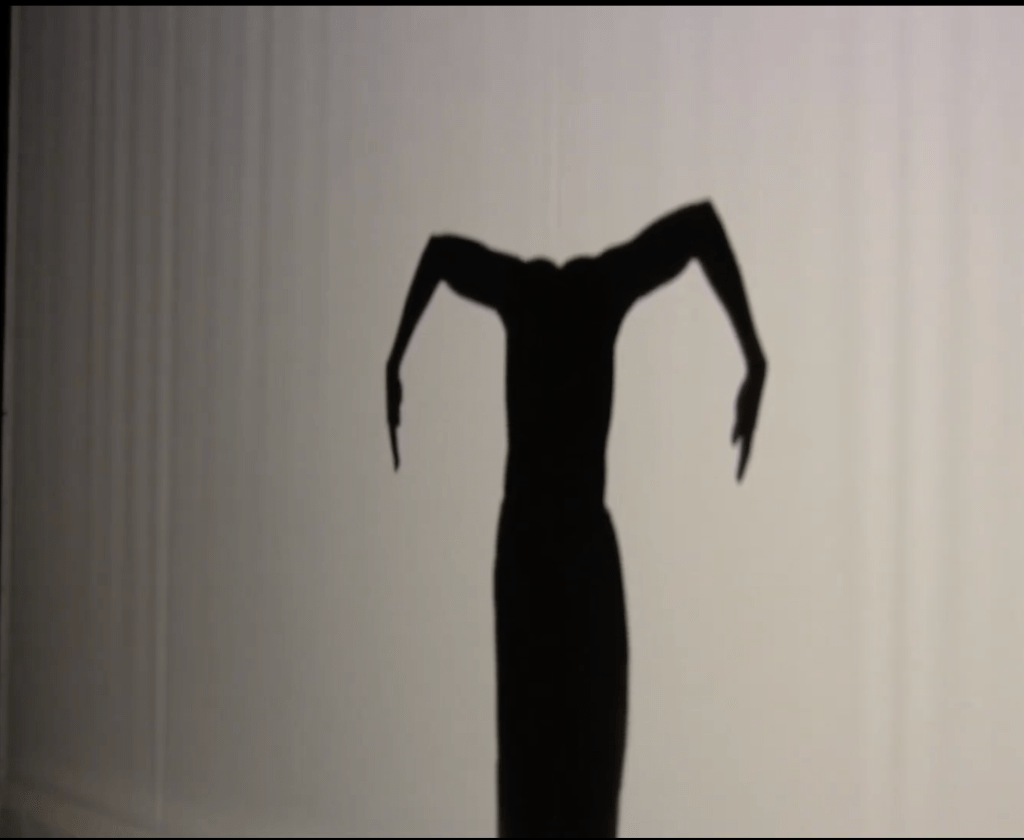
I was awed by the reception and indulgence that my colleagues exhibited during the storytelling session. After playing around with my shadow in my room with the help of a study lamp, I had a great piece that was showcased after the storytelling session.
Here is a link to the shadow play titled Ananse and the Box of Wisdom which is not a direct representation of Ananse and the Pot of Wisdom but rather inspired by it.
 The Creative Process